August 31, 2026
Share this page


How Surface Pro is unlocking the secrets of a remote Spanish cave
In this article:
- Technology like the Surface Pro and Surface Pro for Business are helping archaeologists preserve the past by documenting it in place, rather than excavating it.
- Portable digital tools allow researchers to learn more while spending less time inside fragile archaeological sites.
- La Garma is reshaping our understanding of how Paleolithic people lived, worked, and moved through cave environments.
- Combining 3D mapping, digital records, and AI is dramatically accelerating archaeological discovery.
- Surface Pro brings powerful field documentation directly to the source, helping researchers protect irreplaceable history.

Join the MSFT:FWD newsletter.
Receive stories worth opening, every time. MSFT:FWD delivers forward-worthy stories, simply.
The warmth of the Spanish summer fades quickly as Carlos García-Noriega Villa descends into La Garma, a sprawling cave system in the country’s Cantabria region.
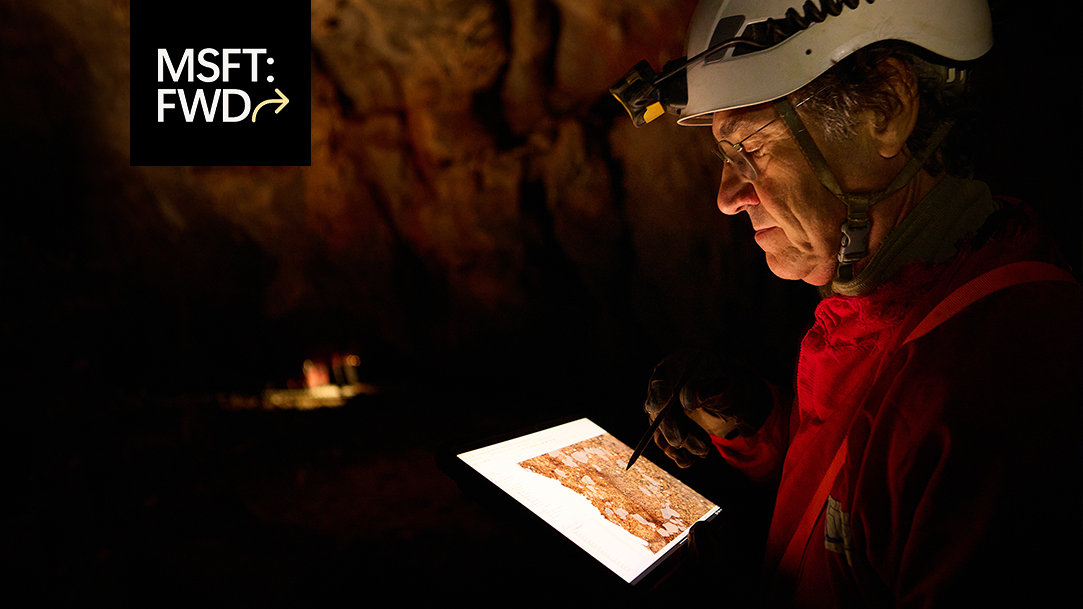
Daylight ebbs with each step forward; gloom closes in, and the air — nearly 20°F cooler than outside — starts to feel cold and damp. Water drips somewhere in the dark. Then, as the passage tightens, the archaeologist’s face lights with the glow of a Surface Pro.
On screen is the map that will guide his work in the lower gallery, where bones, tools, hearths, shelters, and rock art remain close to where Paleolithic people left them more than 16,000 years ago. “Our first rule is not to touch the things we discover,” García-Noriega says. “We record every fragment where it is, maintaining its position and its relationship with everything around it.”
A little farther up, Pablo Arias Cabal, García-Noriega’s colleague at the University of Cantabria, pauses at one of La Garma’s many paintings: two red ochre figures, likely deer or ibex, animals the cave’s hunter-gatherers would have known well.
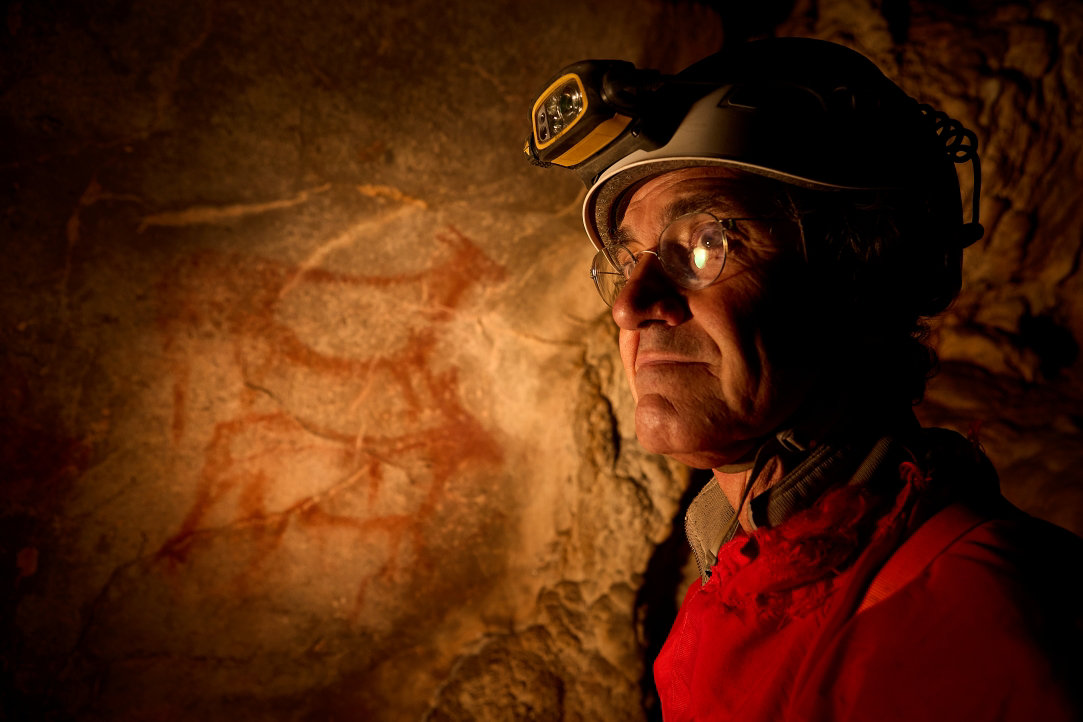
Remarkable as they are, such finds are fragile. Each visit changes the cave’s atmosphere. Body heat and breathing raise temperature and carbon-dioxide levels, disrupting the stable conditions that have protected the caverns for millennia. Too much movement can also stir organic material into the air, helping destructive bacteria and fungi grow.
That is why García-Noriega and Arias are departing from the doctrine of traditional archaeology: Rather than excavating the floor and removing its contents, they are using light, portable technology like the Surface Pro and Surface Pro for Business with Surface Slim Pen to document the site in place, limiting their time underground while keeping intact the environment that gives each piece its meaning.
The story behind the finds
When archaeologists unearthed La Garma in 1995, they found one of the most complete Stone Age dwellings ever recorded. A roof collapse had sealed the entrance thousands of years earlier, leaving the remnants of human occupation largely untouched.
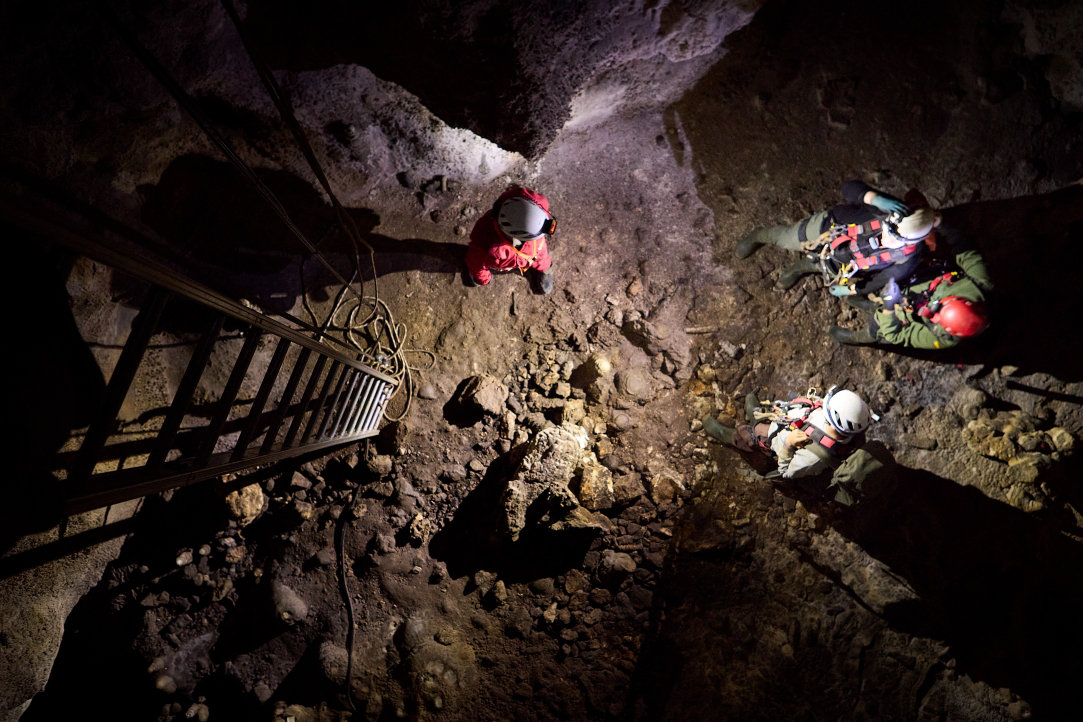
Reopening the original access point would have made fieldwork easier, but the risk to the cave’s natural ventilation and the precious artifacts inside was too great. It would also have paved the way for a heavier form of archaeology, with more people entering a space where delicate evidence is easily disturbed.
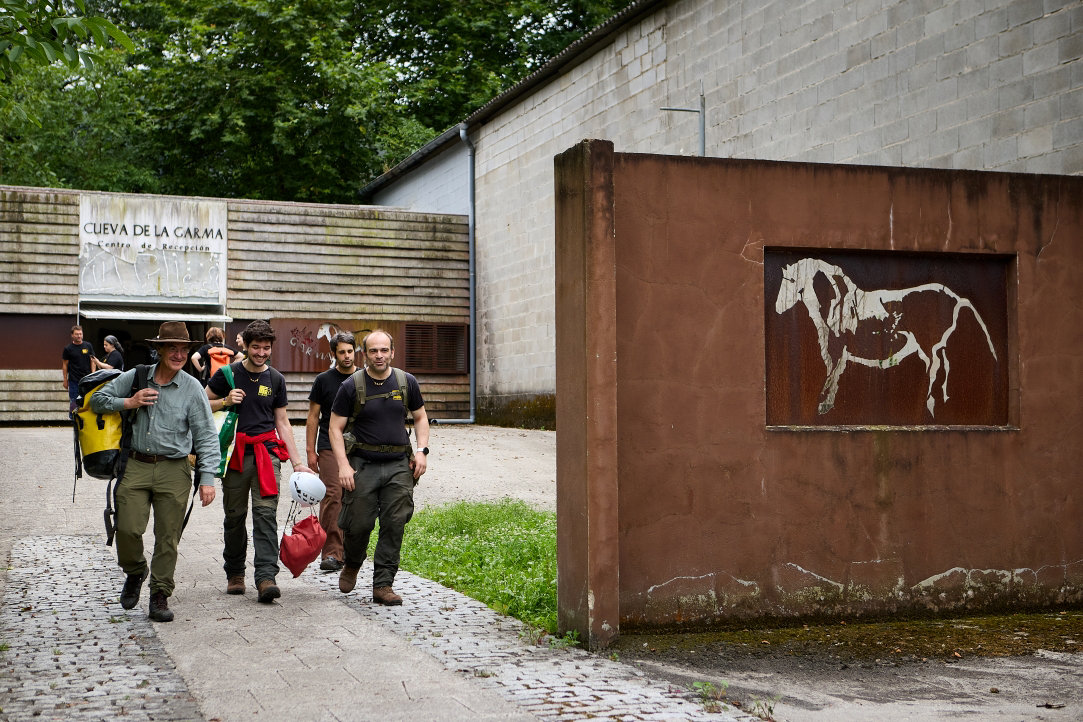
With this in mind, Arias, who leads the La Garma initiative, developed a less invasive methodology. Researchers enter through shafts from the levels above, studying the artifacts in situ, taking selected ones out only after they’ve been cataloged in the project database. “Context is much more important than the objects themselves,” Arias explains. “With context, even something that is not spectacular can be very important.”
An animal bone, for instance, doesn’t simply show that prey was brought into the cave. Its exact position — beside ash, worked stone, scrape marks, or other discarded implements — indicates where butchery, cooking, or disposal took place, and whether those acts belonged to a repeated pattern rather than a one-off event. Insights like this, multiplied across thousands of finds, allow García-Noriega, Arias, and their peers to better grasp the nuance of a little-understood ancient community.
Documenting without disturbing
The day’s work begins above ground. Before García-Noriega enters La Garma, the team studies photogrammetric models — detailed 3D records built from photographs taken inside the cave — and decides which chambers can realistically be covered during the few hours available. Those models become the working plan García-Noriega carries with him underground.
Once he reaches the chosen area, García-Noriega follows the digital blueprint loaded onto his Surface Pro. Each object appears within an already mapped section of the site, where its place on screen has to be checked against what’s physically in front of him.
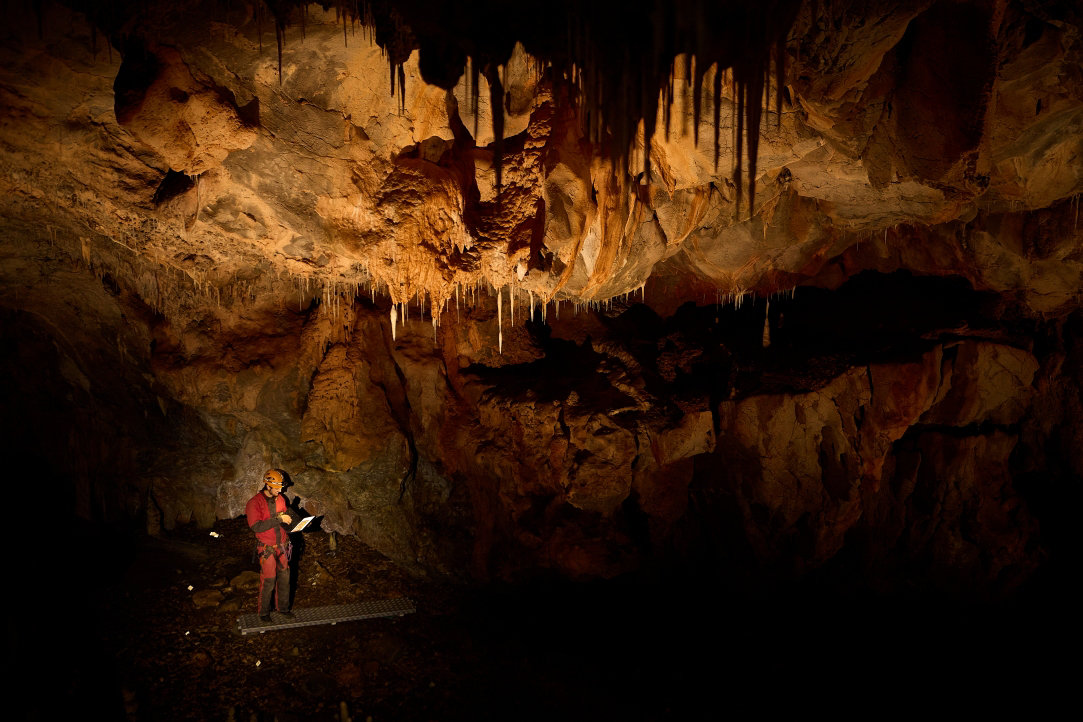
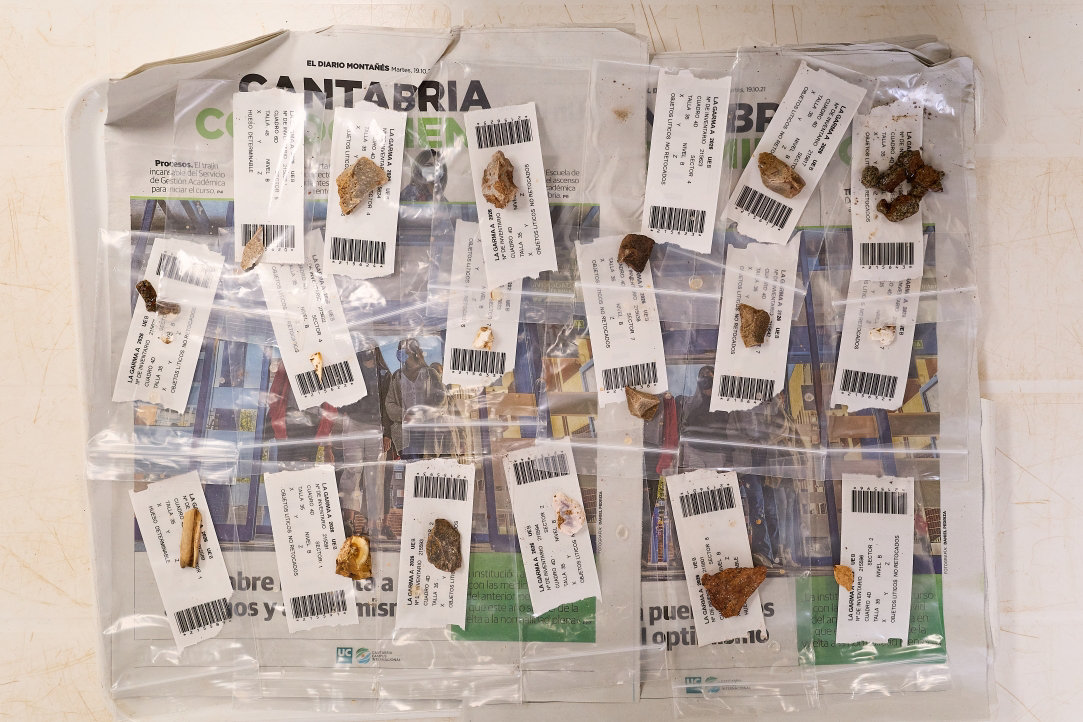
García-Noriega carefully examines the object, identifies the material, and adds an identification number. Then, using a Surface pen, he quickly traces the outline into a geographic information system (GIS), placing the find within the cave’s wider digital archive.
While most stay where they are, specific pieces are extracted for closer scrutiny. In 2022, grave goods and human body parts — including skulls — were analyzed in this way, with carbon dating, DNA work, and dietary tests revealing a Visigothic funerary deposit from around the eighth century, far later than La Garma’s prehistoric story. Loose bones from the Paleolithic period have also been found in contexts with no associated burial, hinting at an unconventional mortuary practice in which selected remains may have been kept for familial or symbolic reasons — a possibility specialists are still trying to understand.
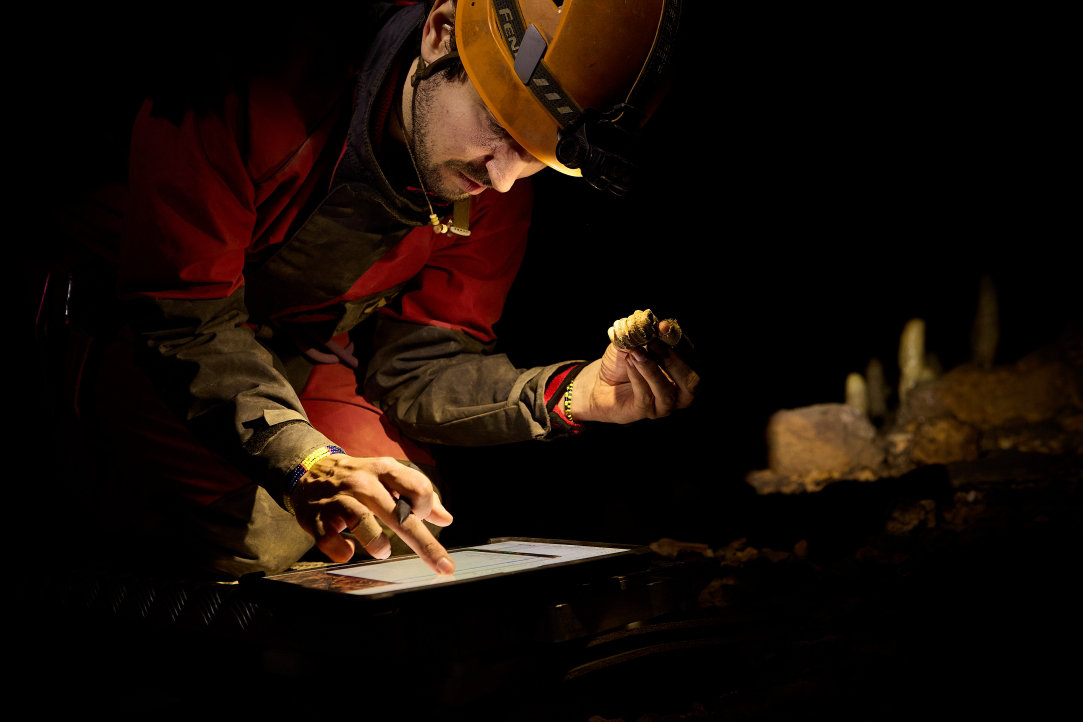
More powerful Windows systems support this deeper investigation, handling large 3D models, specialist analysis, and the accumulated archaeological data. Surface Pro’s job is different: it brings the field record to the source, helping García-Noriega document more during each tightly limited exploration. In La Garma’s chilly, humid chambers, with no flat place to set down a full-sized laptop, the device keeps García-Noriega's Windows-based notes within easy reach. He uses touch to move through the virtual layout, the pen to draw precise sketches, and the keyboard for fuller notes when needed.
This way of working is a sharp break from the study’s earlier years, when photogrammetry meant film, slides, expensive cameras, lab processing, and slow digitization. “We have done more in the last three years than in the 20 years before,” Arias says, smiling. With high-resolution 3D records and a searchable library, the team can now evaluate and compare thousands of small observations without repeatedly returning to the cave floor.
The human world inside the cave
The project’s accelerated pace is deepening one of La Garma’s most important challenges to older archaeological thinking. Caves with Paleolithic art were often treated as places people entered for rare ceremonial moments. La Garma suggests something more familiar and sustained.
Paths, small, constructed steps, and children’s footprints in remote areas have been found, while pigment in narrow channels appears to have rubbed from painted bodies as individuals squeezed through, implying repeated movement along rockfaces known by touch as well as sight. The site’s shelters complicate the picture further. Stone Age huts have been found elsewhere, usually outdoors. At La Garma, people built them inside a cave that already offered protection, perhaps to create a smaller, warmer living area within the larger chamber.
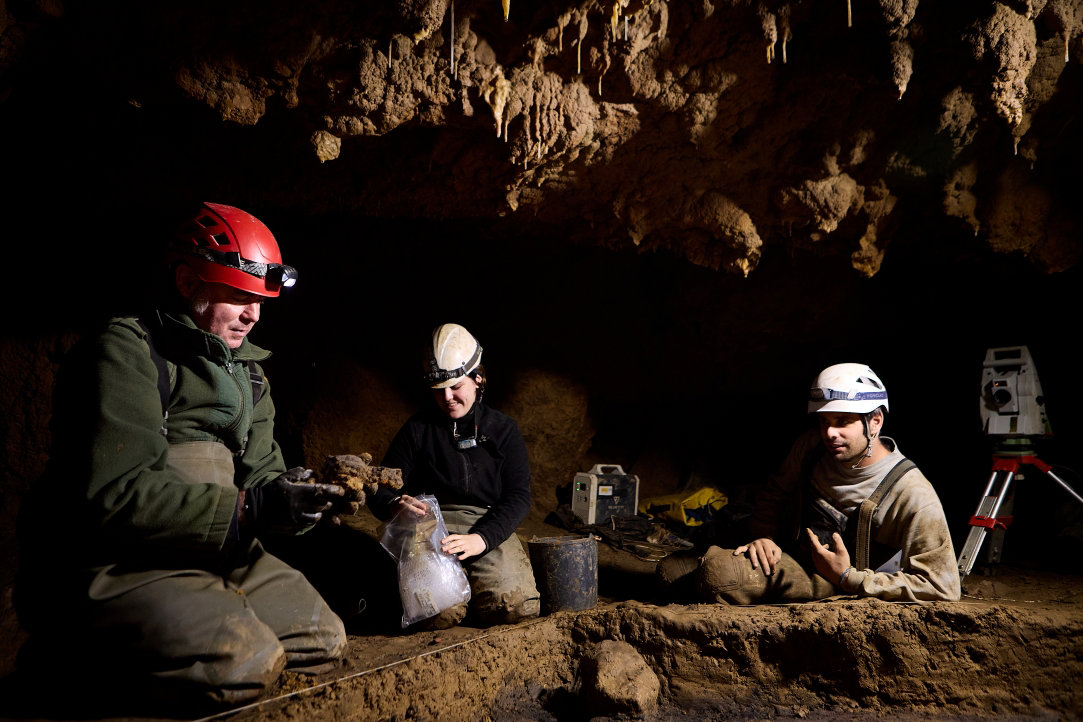
Many questions remain unanswered across the hundreds of square meters that have yet to be documented, but the team can’t simply add more researchers without piling additional pressure on the subterranean atmosphere. Progress depends instead on tools that make each visit count, from faster image management and real-time GIS to AI-assisted identification, which may eventually help classify objects and spot patterns across material too vast to review quickly by hand.
This, García-Noriega believes, is the future of La Garma’s archaeology, combining expertise with technology to recover more of the past without taking apart the place that preserved it. “The goal is not to go faster at any cost. It is to bring this extraordinary human world back into view while leaving the cave as we found it.”

Carlos García-Noriega Villa
Carlos García-Noriega Villa is a prehistoric archaeologist and postdoctoral researcher at the University of Cantabria specializing in computational archaeology, spatial analysis, and digital technologies for studying and preserving prehistoric sites.

Pablo Arias Cabal
Pablo Arias Cabal is a professor of prehistory at the University of Cantabria and archaeologist specializing in prehistoric societies, with decades of research into Paleolithic and Mesolithic sites, including the long-running investigation and preservation of La Garma.