
Medical, health, and genomics

Tool
BioEmu-1
Biomolecular Emulator (BioEmu-1 for short) is a deep learning model that can generate thousands of protein structures per hour on a single graphics processing unit. It provides orders of magnitude greater computational efficiency compared to…
Tool
EvoDiff
EvoDiff is a general-purpose diffusion framework that combines evolutionary-scale data with the distinct conditioning capabilities of diffusion models for controllable protein generation in sequence space. EvoDiff generates high-fidelity, diverse, and structurally-plausible proteins that cover natural…
Video
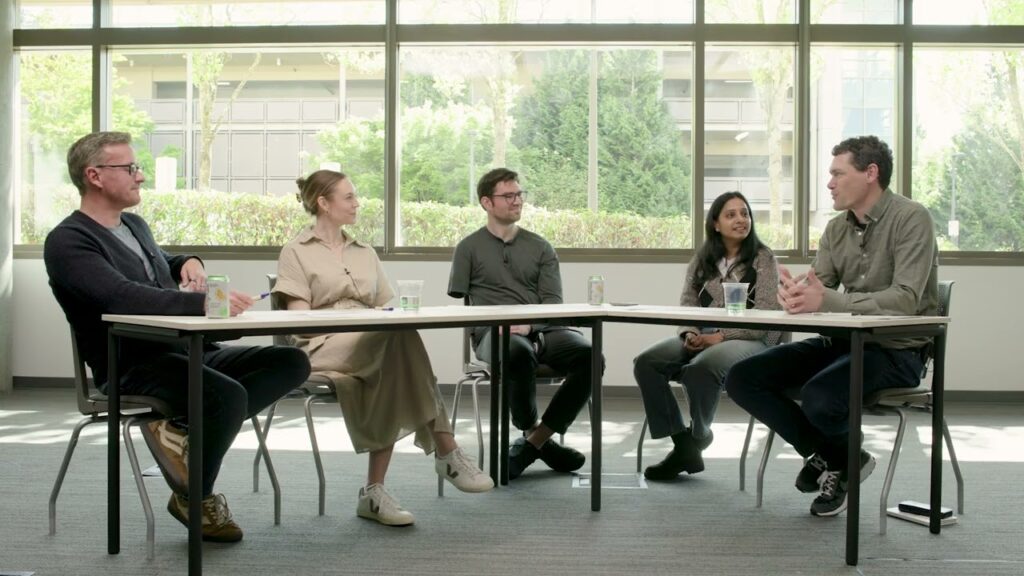
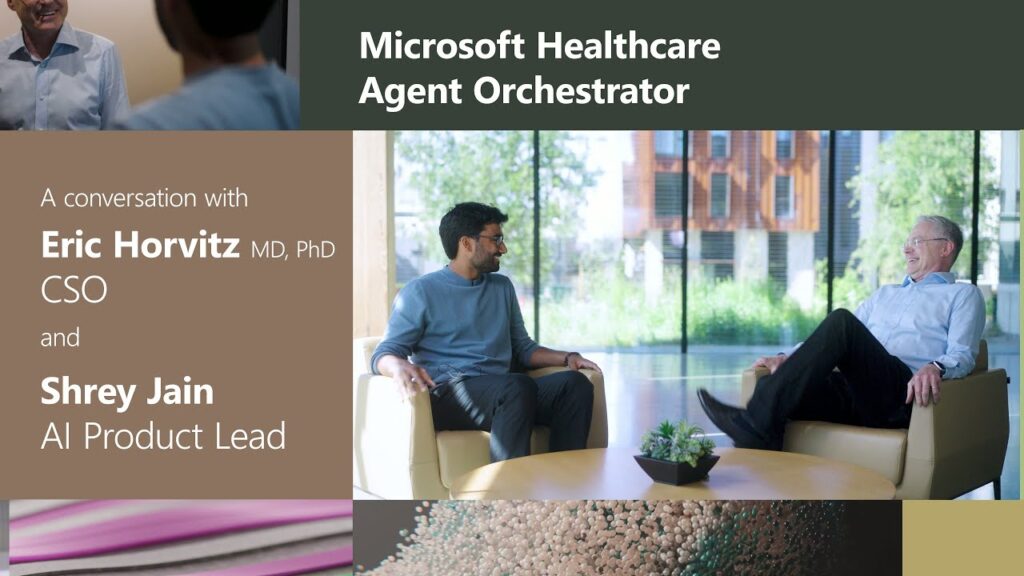
Transforming Tumor Boards: AI Agents and the New Era of Personalized Cancer Care
In this fireside chat, Shrey Jain, Product Lead of the Healthcare Agent Orchestrator, joins Eric Horvitz, Chief Scientific Officer at Microsoft, to explore how AI agents are revolutionizing personalized cancer care. They delve into the…
Tool
Microscopy for Single Cell Robustness
An evaluation of AI-driven microscopy image analysis suggests reliability issues in single cell analysis. This repository contains code used in our paper, “Representation Learning Methods for Single-Cell Microscopy are Confounded by Background Cells,” to evaluate…
Podcast
How AI is reshaping the future of healthcare and medical research
Technologists Bill Gates and Sébastien Bubeck discuss the state of generative AI in medicine, how access to “medical intelligence” might help empower people across healthcare, and how AI’s accelerating improvements are likely to affect both…

Tool
Protein Language Model Subnetworks
Protein language models (PLMs) pretrained via a masked language modeling objective have proven effective across a range of structure-related tasks, including high-resolution structure prediction. However, it remains unclear to what extent these models factorize protein…
Video
Episode 7: The road ahead
In this final episode of the series. Microsoft health leaders look three years into the future and predict some big innovations to come. Their forecasts include multimodal AI agents that will transform healthcare by saving…