


Computer Vision
Enabling computers and devices to understand what they see.
Video
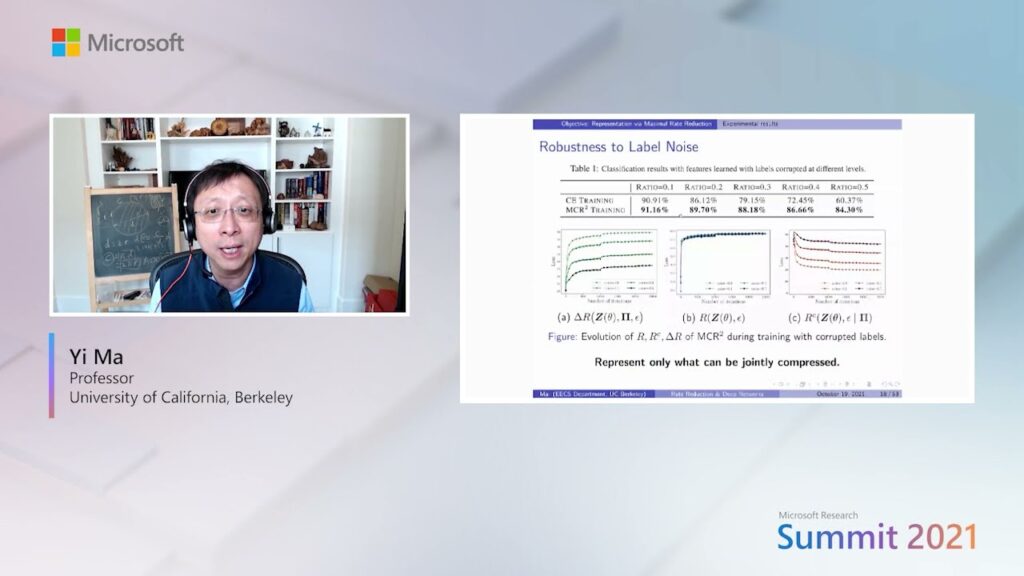
Keynote: ReduNet: Deep (convolutional) networks from the principle of rate reduction
In this talk, we will offer an entirely white-box interpretation of deep (convolutional) networks from the perspective of data compression and group invariance. We’ll show how modern deep-layered architectures, linear (convolutional) operators and nonlinear activations,…
Video
Closing remarks: Towards Human-Like Visual Learning and Reasoning
Big data-driven deep learning has helped significantly improve the performance of visual tasks in the past few years, but it has also exhibited limitations in scalability and adaptation to real-world scenarios. Researchers and practitioners are…
Video
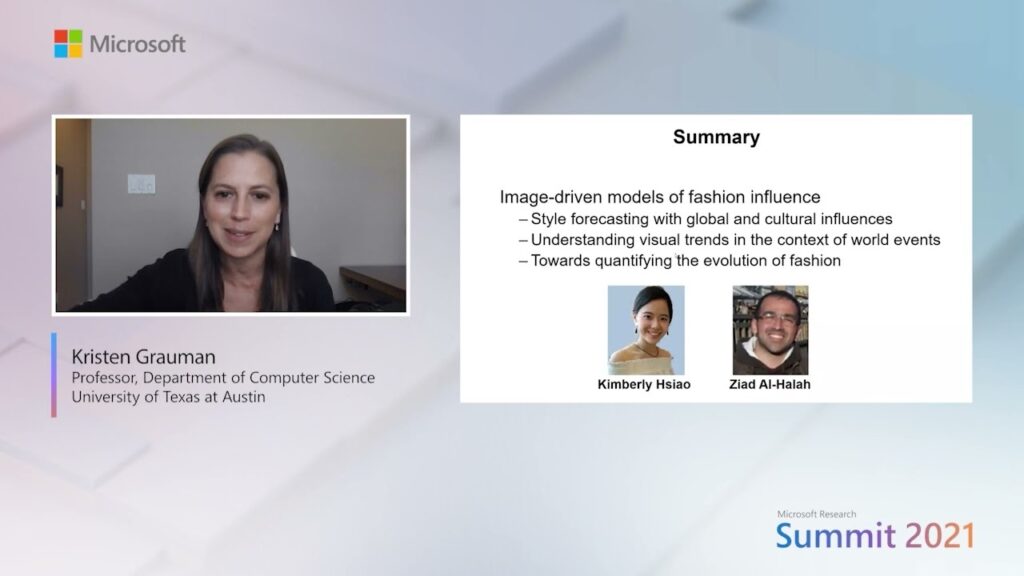
Research talk: Capturing the visual evolution of fashion in space and time
The fashion domain is a magnet for computer vision. New vision problems are emerging in step with the fashion industry’s rapid evolution towards an online, social, and personalized business. Style models, trend forecasting, and recommendation…
Video
Panel: Computer vision in the next decade: Deeper or broader
Deep learning plus huge training data is a popular paradigm in computer vision. However, after a decade of growth, it’s time to revisit its strengths and weaknesses. Will there be a new trend in computer…
Video
Opening remarks: Towards Human-Like Visual Learning and Reasoning
Big data-driven deep learning has helped significantly improve the performance of visual tasks in the past few years, but it has also exhibited limitations in scalability and adaptation to real-world scenarios. Researchers and practitioners are…
Video
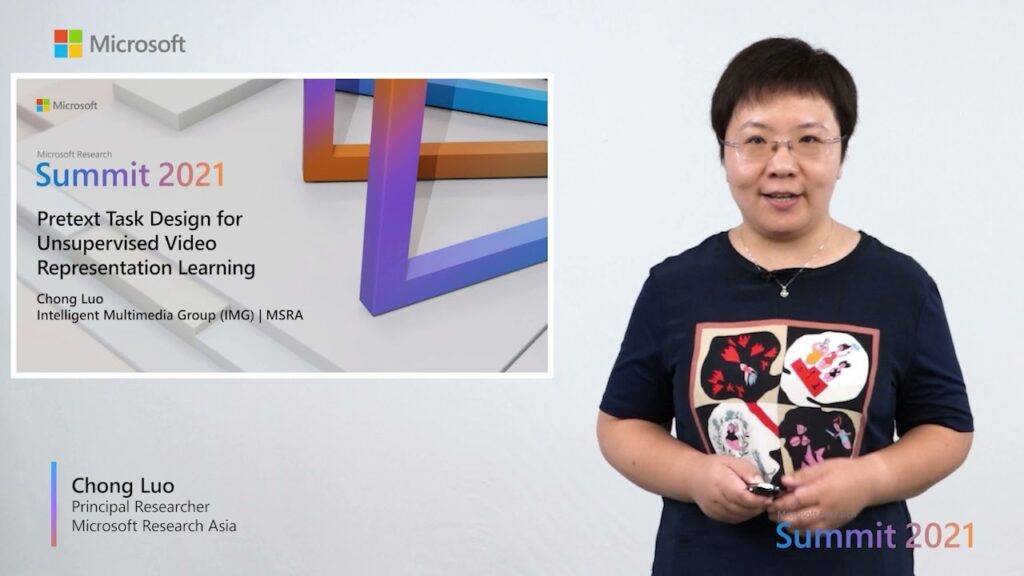
Research talks: Generalization and adaptation
The limitations of big data-driven deep learning in scalability and adaptation to real-world scenarios hinder its practical applications. To address these limitations, it’s extremely important to develop architectures and algorithms that can capture the fundamentals…
Video
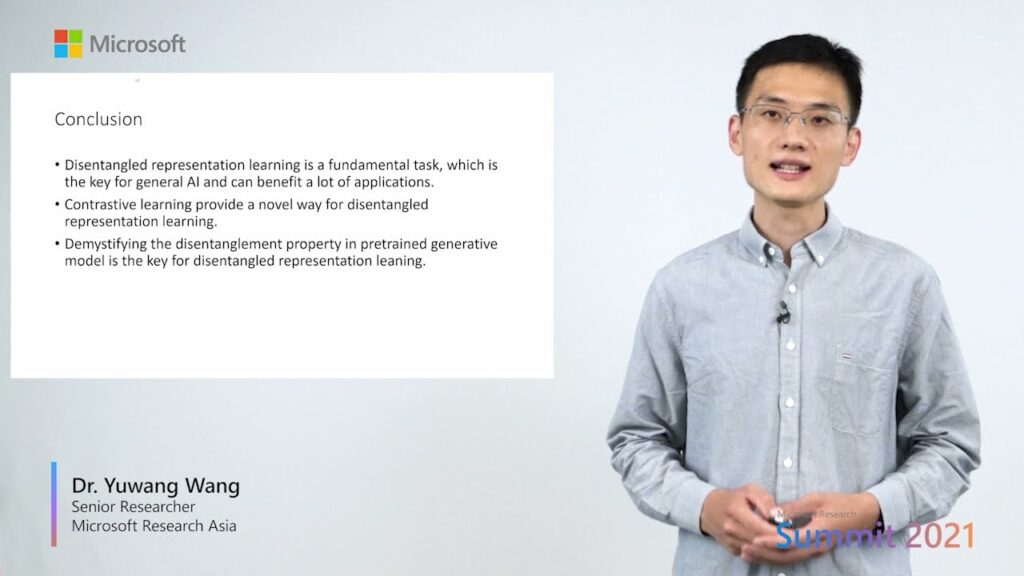
Research talks: Learning for interpretability
Speakers: Hanwang Zhang, Professor, Nanyang Technological University Yuwang Wang, Senior Researcher, Microsoft Research Asia Shujian Yu, Professor, UiT – The Arctic University of Norway One of the critical shortcomings of big data-driven deep learning is…
Video
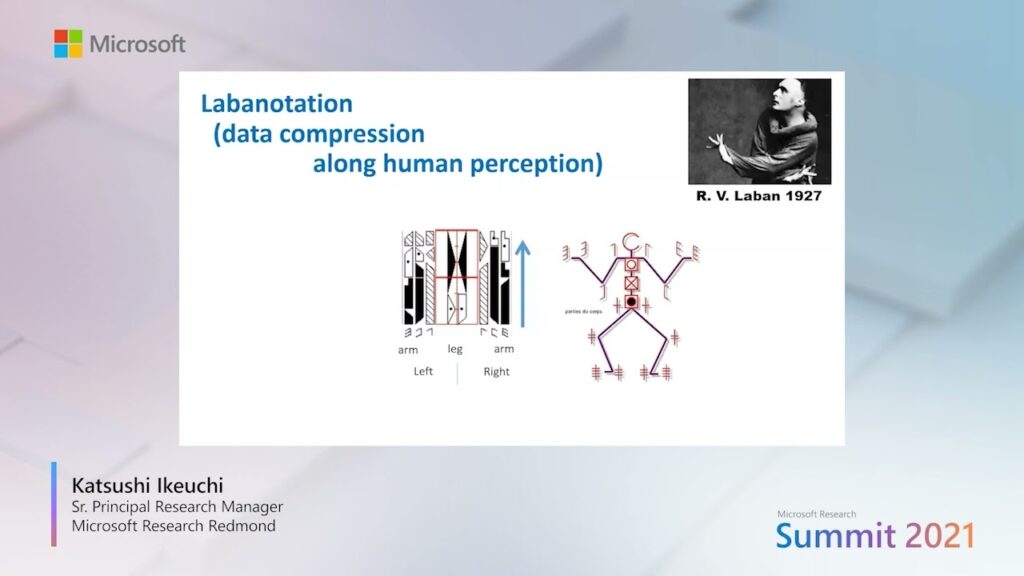
Keynote: Learning from observation: Small-data approach to human common sense
Speaker: Katsushi Ikeuchi, Sr. Principal Research Manager, Microsoft Research Redmond Learning-from-Observation (LfO), a robot-teaching paradigm, aims to build a robot system that understands what humans do through a small number of human observations and map…
Video
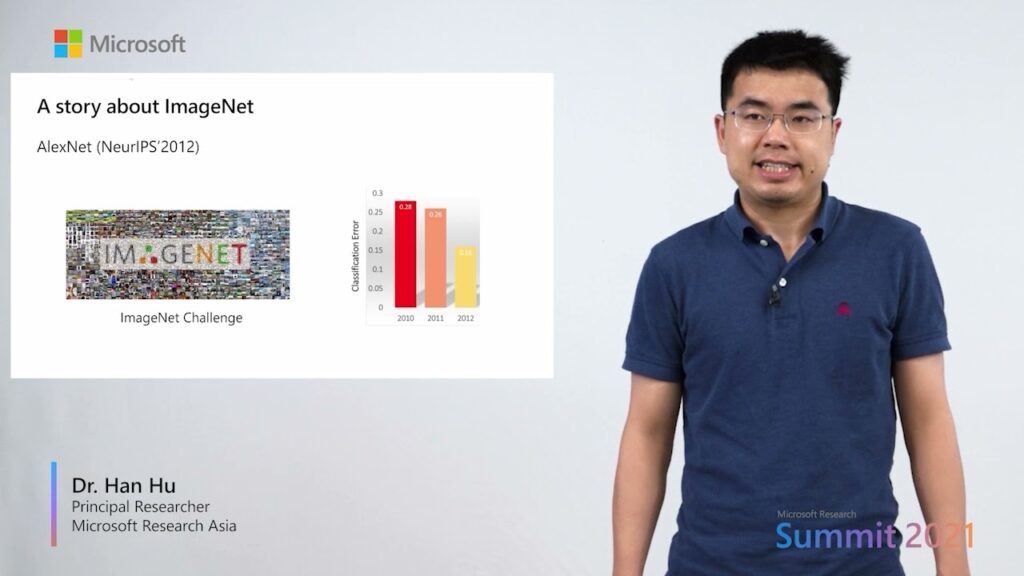
Research talks: Few-shot and zero-shot visual learning and reasoning
Humans learn, infer, and reason by leveraging prior knowledge without necessarily observing a large number of examples. Visual learning and reasoning technologies, such as few-shot and zero-shot learning, aim to enable human-like learning and reasoning…
Group
Biomedical Imaging
We are exploring how novel signal processing techniques and AI can allow us to produce images from less data than is currently required.