
Microsoft Research Lab – Redmond
News & features
In the news | Washington State DOT
Help researchers train computers to recognize road users, prevent collisions
What if we could use technology to predict where vehicle collisions involving people who walk or bike will occur, then take steps to prevent them? Would you want to help? Well, now you can.
In the news | KIRO 7
Volunteers needed to improve traffic safety using high-tech
The city of Bellevue is asking for the public’s help to make streets safer using new technology. Bellevue is working with Microsoft and the University of Washington on a cutting-edge effort to help prevent traffic deaths and serious injuries from…
In the news | Mobility Lab
Vision Zero video tool analyzes intersections for dangerous traffic conflicts
Volunteers will “teach” the program to better identify people walking and biking. Despite signing onto Vision Zero, a campaign that aims to eliminate traffic-related deaths and serious injuries, Washington, D.C. and other large cities have struggled to make progress in…
In the news | GeekWire
Human and computer vision unite to help Microsoft engineers stop traffic deaths
The plan is to generate data about crashes and use it to improve roadways and prevent collisions between cars, trucks, bikes and pedestrians.
Awards | Brandeis University
Leslie Lamport receives honorary degree from Brandeis University
Leslie Lamport received an honorary degree (opens in new tab) from Brandeis University, where he earned both his master’s (’63) and PhD (’72) in mathematics. Lamport’s pioneering work in principled distributed computing includes the development of protocols that allow computer systems to…
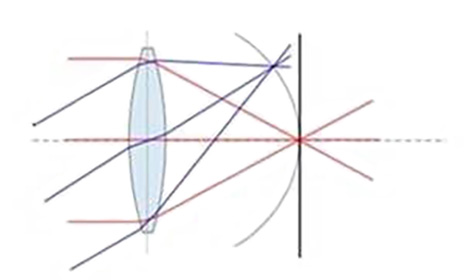
Project Vermont: Improving camera performance through curved image sensors
By Richard Stoakley, Microsoft Research It’s hard to remember when our world wasn’t full of cameras. They’re in our phones and tablets, posted on street corners and in our buildings and cars. We rely on them not just to capture…
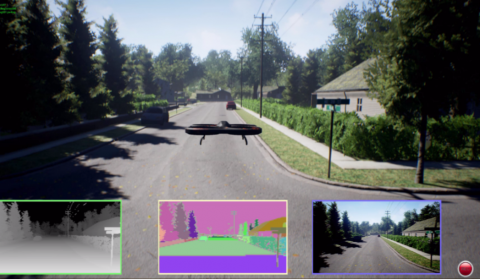
Toward AI that operates in the real world
By Ashish Kapoor, Microsoft Research It’s an exciting time to be a machine intelligence researcher. Recent successes in machine learning (ML) and artificial intelligence (AI), which span from achieving human-level parity in speech recognition to beating world champions in board…
Holograms: The future of near-eye display?
By Andrew Maimone, Researcher; Andreas Georgiou, Researcher; Joel Kollin, Principal Research Hardware Development Engineer Last week at the SCIEN Workshop on Augmented and Mixed Reality, a group of industry and academic researchers met to discuss the future of virtual and mixed reality (VR/MR).…

P: A programming language designed for asynchrony, fault-tolerance and uncertainty
By Shaz Qadeer, Principal Researcher The complexity of emerging software applications requires new approaches to understanding and then efficiently building, testing and debugging these systems. Today’s software uses cloud resources, is often embedded in devices in the physical world and…