

Microsoft Research Cambridge
News & features

All Data AI with Dr. Andrew Fitzgibbon
You may not know who Dr. Andrew Fitzgibbon is, but if you’ve watched a TV show or movie in the last two decades, you’ve probably seen some of his work. An expert in 3D computer vision and graphics, and head…
Awards | UK Office for Artificial Intelligence
Chris Bishop appointed to UK’s AI Council
Chris Bishop was appointed along with other leaders from business, academia and data privacy organizations to the UK’s Artificial Intelligence (AI) Council created to help boost growth of AI in the UK by promoting its adoption and ethical use in…
In the news | Neue Zürcher Zeitung
DNA as storage medium of the future
Die Universität von Washington arbeitet mit Microsoft daran, DNA als Speichermedium der Zukunft zu entwickeln. Rechenzentren könnten auf die Grösse von Spielwürfeln schrumpfen, Daten jahrhundertelang lesbar bleiben.
Awards | Microsoft News Centre UK
Simon Peyton Jones appointed chair of National Centre for Computing Education
Simon Peyton Jones, principal researcher at Microsoft and one of Britain’s leading computer scientists, was appointed chair of the Government’s new National Centre for Computing Education (NCCE), which works to improve the teaching of computer science in schools. He will…
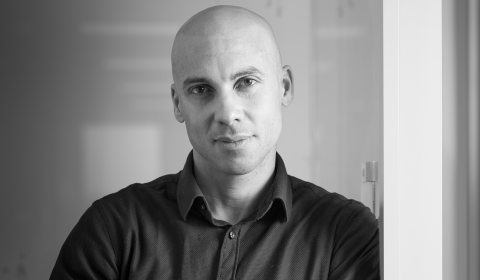
Programming biology with Dr. Andrew Phillips
Episode 67, March 13, 2019 – Today, Dr. Phillips talks about the challenges and rewards inherent in reverse engineering biological systems to see how they perform information processing. He also explains what we can learn from stressed out bacteria, and…
In the news | Tages-Anzeiger
Smartglasses will replace the mobile phone
In the news | Microsoft Innovation Stories
With lessons learned from computers, a new platform could help boost production of lifesaving biological therapies
The project, called Station B, aims to develop an end-to-end platform to help scientists more efficiently and predictably channel the power of life’s ultimate information processing machines: living cells.
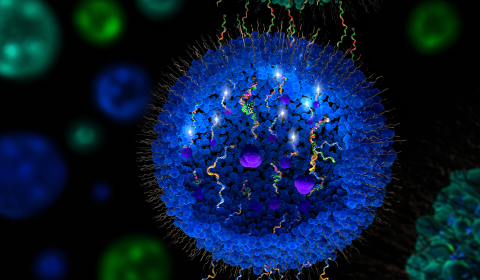
Researchers build nanoscale distributed DNA computing systems from artificial protocells
Living cells communicate with each other by sending and receiving molecular signals that diffuse between neighboring cells to activate key molecular processes. This communication enables cell populations to implement collective information processing functions that cannot be achieved by individual cells…
In the news | Financial Times
Microsoft moves into biological computing with Station B
Microsoft will make a big move into biotechnology on Tuesday with the launch of a new research system that enables scientists to engineer living cells using machine learning and data analysis.