Why a Safety Net for Organizational Data Matters
Data is the center of every organization. With millions of records deleted daily—whether through routine clean-ups, app usage, or retention policies—the risk of accidental or malicious data loss is real and costly. Lost data can disrupt operations, impact compliance, and harm reputation.
To prevent this, we are excited to announce that the capability to restore deleted table records in Microsoft Dataverse in General Availability starting late April 2026 with additional enhancements based on feedback from customers and MVP community. Organizations have the assurance that they can recover from unforeseen data loss without disruptions, ensuring business continuity and customer trust.
How Data Loss Happens
Records can be deleted from multiple sources and understanding these data loss scenarios is essential:
- Custom apps used by end users. End users often interact with apps directly, and accidental deletions can occur during everyday tasks.
- Makers building solutions. Makers frequently experiment and iterate while creating apps and flows. During this process, records may be deleted unintentionally.
- Admins running bulk delete jobs. Admins schedule clean-up jobs to optimize performance and storage. However, these automated jobs can sometimes remove data that later proves necessary.
- Retention policies moving old data to managed data lakes. Older data moved to cold storage optimizes performance and reduces costs. However, restoring from cold storage can be slow and complex.
Consistent Deleted Records Keeping
Previously, deleted records keeping settings could vary by table, creating complexity for admins and uncertainty for users. For example, in environments with parent-child relationships, partial keeping of deleted records often meant incomplete recovery—leading to operational risks.
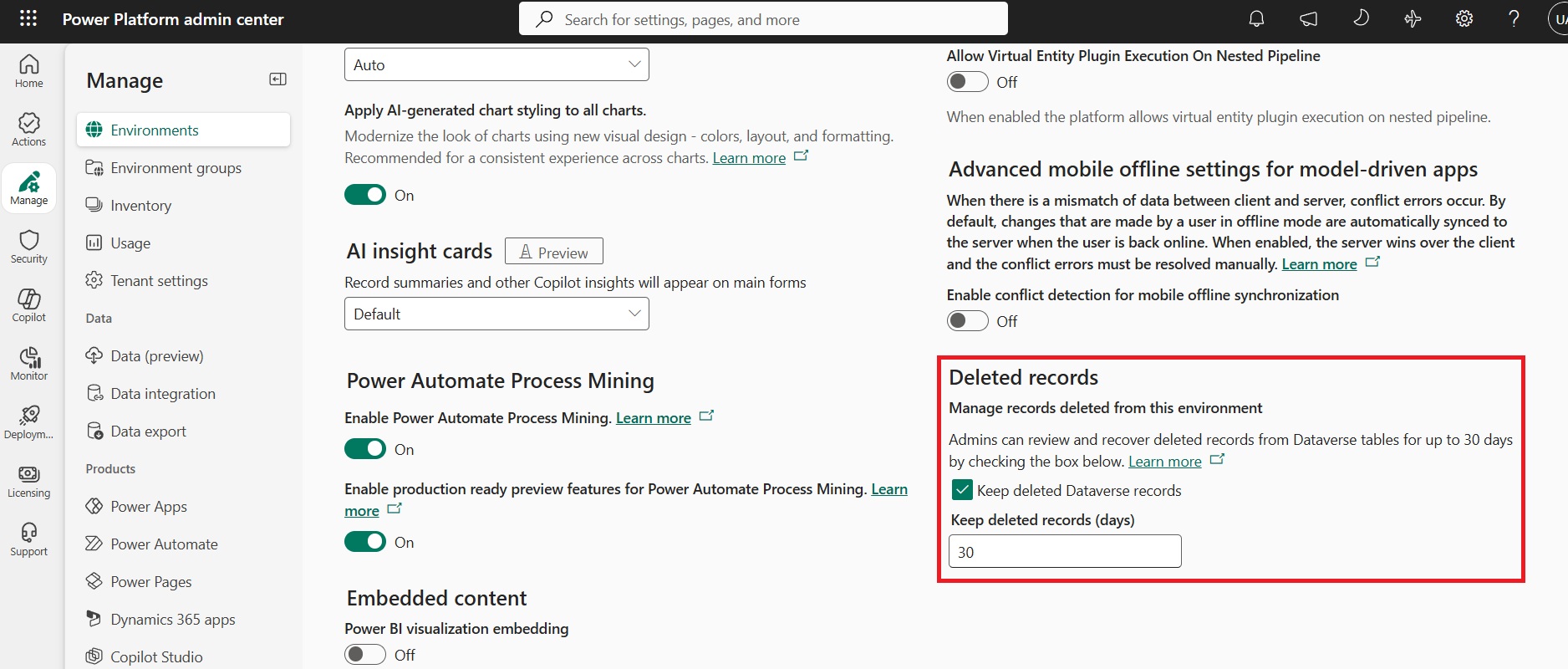
To eliminate this complexity, deleted records keeping is now managed at the environment level. Admins can enable or disable deleted records keeping for all tables in an environment with a single setting by going to feature management.
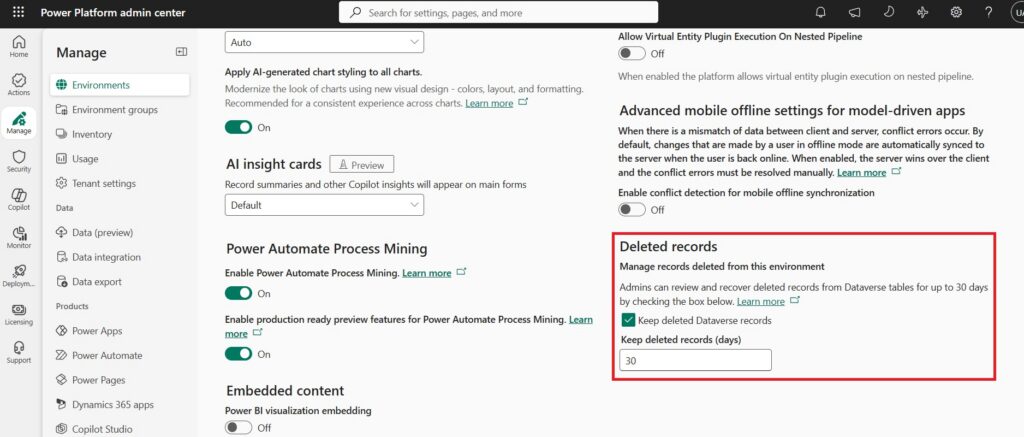
This change ensures:
- Consistency: No more guessing which tables are covered. Every table in the environment follows the same deleted records keeping policy, reducing confusion and ensuring predictable outcomes.
- Reliability: Full recovery of related records. Parent and child records are kept together, eliminating partial recovery scenarios and safeguarding data integrity.
- Simplicity: Reduced administrative overhead. One setting replaces multiple table-level configurations, saving time and reducing the risk of misconfiguration.
This streamlined approach to deleted records keeping turn a fragmented setup into a consistent, organization-wide safeguard.
Admins with Full Control and Visibility
With this update, admins in Power Platform Admin Centre (PPAC) gain complete authority over deleted record keeping and clean-up, along with clear visibility into storage usage:
Optimize with Confidence
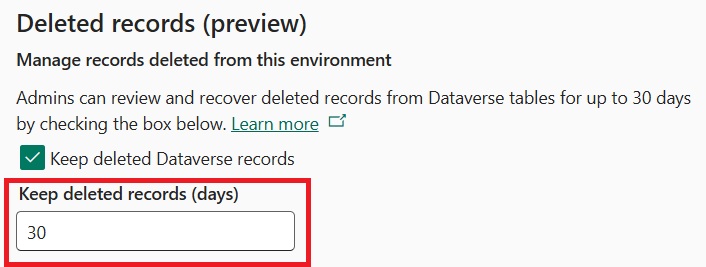
Admins can manage deleted record keeping periods (up to 30 days). Admins can make informed decisions to balance data safety with storage efficiency, tailoring deleted records keeping period to business needs.
Flexible Clean-Up Options
Admin can use the new “Delete All Records” button for quick purges or selectively delete records for granular control. Whether performing routine maintenance or responding to urgent storage constraints, admins have the tools to act swiftly.

Visibility into storage used by deleted records
Admins can now view the storage consumed by deleted records, enabling informed actions to manage database capacity.
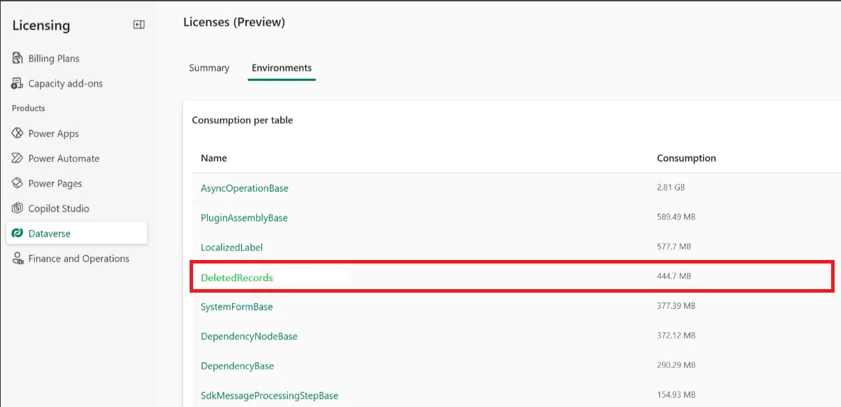
This approach not only empowers admins but also transforms deleted records keeping management into a strategic advantage—balancing data safety with cost efficiency and operational clarity.
Business Benefits
These improvements aren’t just technical changes—they deliver tangible business benefits:
- Reduced risk. Protect against accidental or malicious deletes with a reliable safety net.
- Operational resilience. Restore critical data quickly to maintain continuity and avoid downtime.
- Simplified governance. One setting for all tables means fewer surprises and easier compliance.
With Dataverse, your organization gains a dependable safety net and the flexibility to stay in control of its data. To learn more: