Applied Sciences
Additively manufactured heat exchangers for consumer electronics
In Surface Book with Performance Base, non-uniform airflow passing through the heat exchangers reduces thermal transfer to the air.
Traditional heat sinks with uniformly-spaced sheet metal fins cannot easily conform to this non-uniform air pattern, resulting in higher noise and less thermal transfer to the passing air. Additively Manufactured (AM) heat sinks can make a custom fin geometry that out-performs straight fins, but can the process be used in mass production?
Commercial laser powder bed fusion machines and software programs rely on rudimentary algorithms and generic build parameters, making a high-throughput manufacturing scenario unrealistic.

Microsoft optimized the part design, build parameters, and laser travel for maximum efficiency:
- Thin walls built with a single 1-inch time
- Balanced laser power with speed, solidification
- High density nesting, more than 1,800 parts per build
- High material usage, no support structure
- Minimal post processing
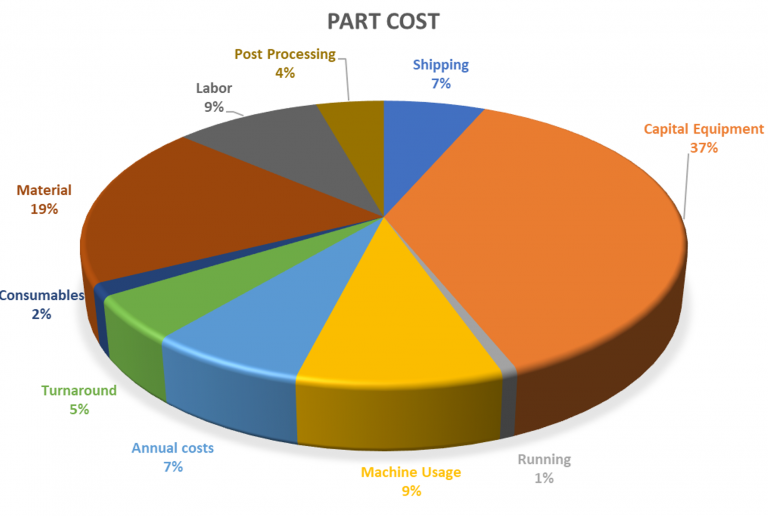
A heat sink made with default parameters would take an average of about 14 minutes, whereas the optimized version takes just 90 seconds—about a 90% reduction. To assess viability for production, some 60,000 parts were built, confirming repeatability, throughput, and cost in a mass-manufacturing scenario.